Beach Yoga & Pilates: Embrace Instability for Real Gains
Confession: I used to dismiss beach yoga as an Instagram backdrop—picture-perfect poses and staged sunsets. Then the studios shut down and my stubborn streak dragged me to the shore with nothing but a towel and curiosity. What I discovered was a raw, unfiltered workout that outstripped any cushioned floor I’d known.
Why Four Walls Aren’t Enough
Studios offer climate control and flat floors, but that safety net can mask imbalances. I learned this when I sprained my ankle in Crow Pose on shifting sand—something my studio mat had never exposed. The lesson? True resilience emerges when you strip away comfort.
Essential Gear & Prep
- Mat or Towel: A sand-friendly mat for support or a towel for extra challenge.
- Breathable Apparel: Moisture-wicking fabrics protect you from sun and sweat.
- Hydration & Sunscreen: One liter of water and broad-spectrum SPF are non-negotiable.
- Timing: Early morning or late afternoon keeps you cool and crowd-free.
- Extras: Sunglasses, a hat, or a portable speaker if you want guided cues or music.
Step-by-Step Beach Yoga & Pilates Routine
1. Find Your Spot & Set Up (10 min)
Choose firmer sand near the waterline for stability or softer dunes for more resistance. Lay your mat perpendicular to the waves so you can breathe in the view. Pro tip: consult tide charts to avoid surprise high tides.
2. Dynamic Warm-Up Flow (5–7 min)
Start with ankle, hip and shoulder rotations, then cycle through Cat-Cow and low lunges. On sand, every shift requires micro-adjustments, waking up stabilizer muscles that stay dormant in the studio.
3. Balance Poses for Core Engagement (8–10 min)
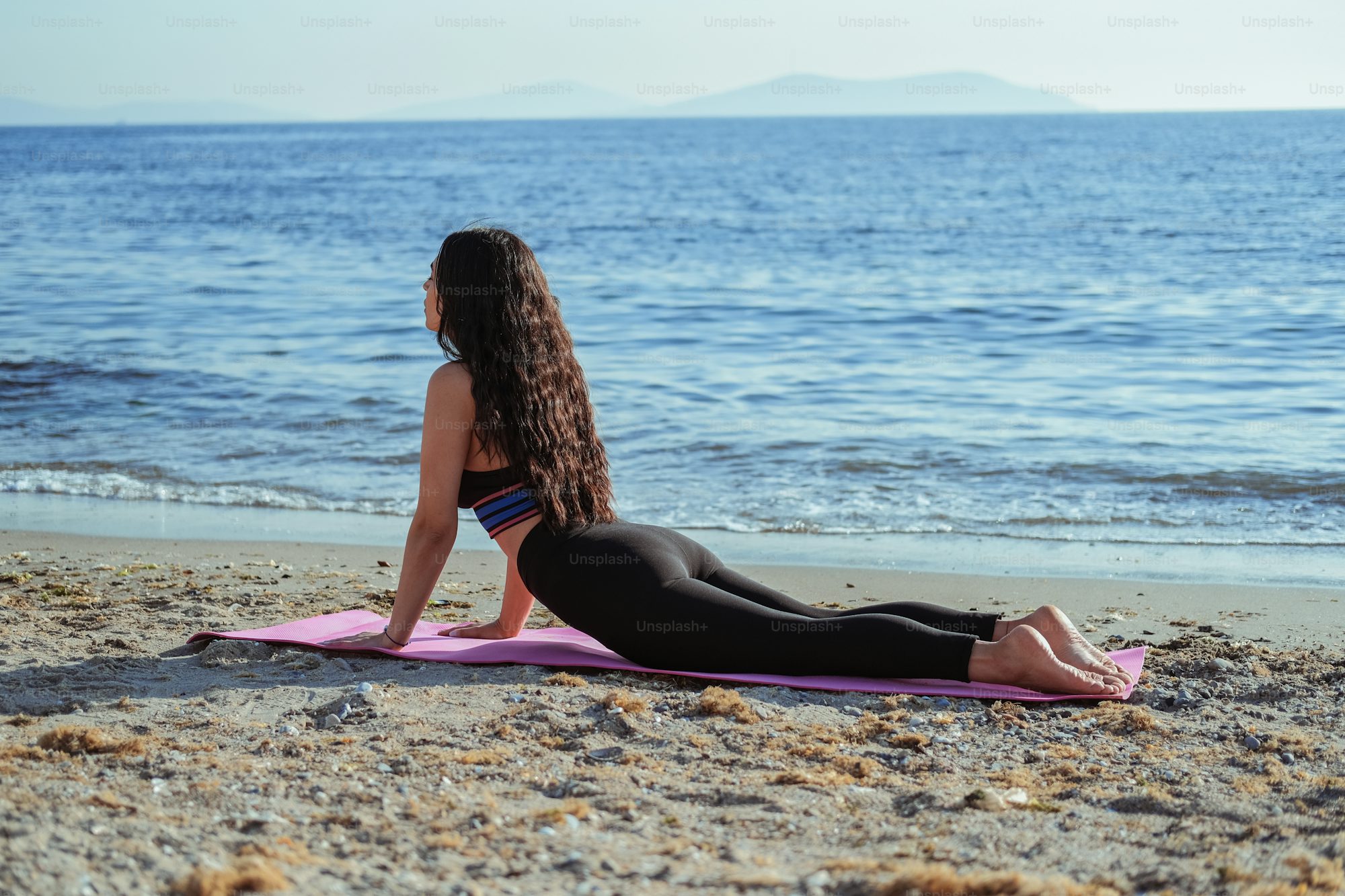
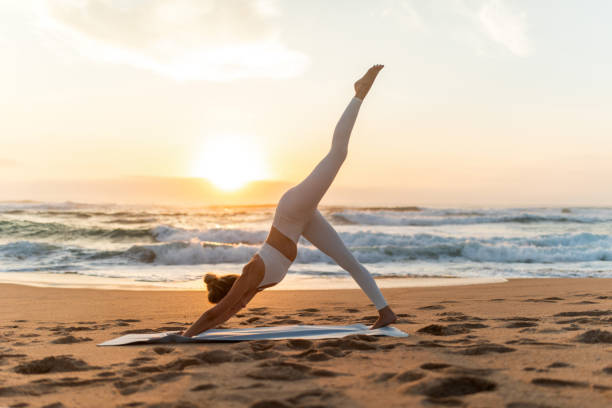
Begin in Tree Pose, distributing weight evenly across heel, ball and outer foot. Progress to Warrior III—lift one leg behind you and reach forward. Hold each side for 30–45 seconds, feeling every shake as feedback.
4. Pilates Core Burn: The Hundred Variation (5 min)
Lie on your back, head and shoulders lifted, legs at a 45° angle. Pump arms for five-count inhales and five-count exhales. The unstable surface forces constant corrections—if your lower back arches, bend your knees or use a thinner towel for extra challenge.
5. Cooling Stretch & Reflection (5–7 min)
Wind down with seated forward folds and gentle twists, then settle into Savasana. Match your breath to the waves and take a moment to absorb what the sand and sea have taught you.
Real-Life Transformations
Emma, the Perfectionist: A die-hard studio yogi, Emma dreaded the beach’s unpredictability. After three sessions, she traded rigid alignment for playful exploration. Not only did her balance improve, but she discovered that laughter eases the fear of falling—now she greets each wobble as part of the journey.
Mark, the Plateau-Breaker: As a seasoned Pilates instructor, Mark hit a strength plateau in static core drills. Introducing wind resistance and shifting terrain reignited his progress—within a week his clients noticed heightened stability, and he returned to the studio with fresh teaching cues inspired by nature’s challenges.
The Science Behind the Shakes
Research shows that practicing on unstable surfaces recruits smaller stabilizer muscles and boosts proprioception—your body’s sense of position in space. Enhanced muscle activation and joint resilience are just two of the documented benefits, making beach workouts a powerful complement to studio practice.
Conclusion: Your Next-Level Practice Awaits
Sand, sun and sea breeze are the toughest coaches you’ll find. When you step off the mat and into nature’s gym, comfort gives way to growth. Ready for an honest practice? Embrace the wild shore and let your most authentic yoga and Pilates journey begin.
Laisser un commentaire